
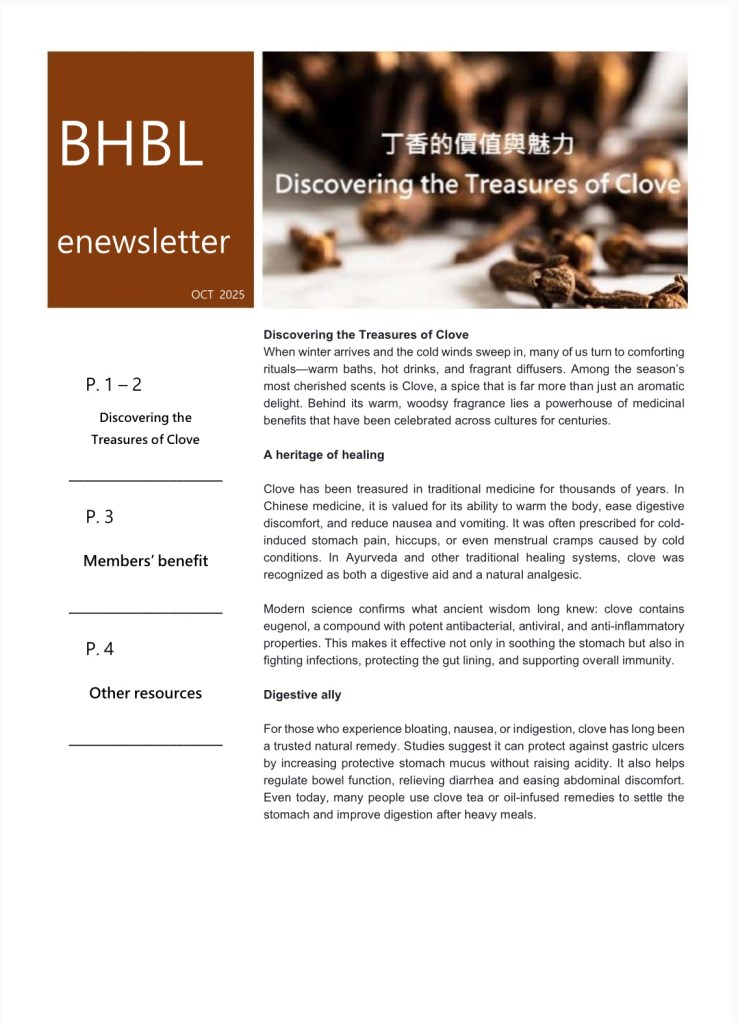
Discovering the Treasures of Clove
When winter arrives and the cold winds sweep in, many of us turn to comforting rituals—warm baths, hot drinks, and fragrant diffusers. Among the season’s most cherished scents is Clove, a spice that is far more than just an aromatic delight. Behind its warm, woodsy fragrance lies a powerhouse of medicinal benefits that have been celebrated across cultures for centuries.
A heritage of healing
Clove has been treasured in traditional medicine for thousands of years. In Chinese medicine, it is valued for its ability to warm the body, ease digestive discomfort, and reduce nausea and vomiting. It was often prescribed for cold-induced stomach pain, hiccups, or even menstrual cramps caused by cold conditions. In Ayurveda and other traditional healing systems, clove was recognized as both a digestive aid and a natural analgesic.
Modern science confirms what ancient wisdom long knew: clove contains eugenol, a compound with potent antibacterial, antiviral, and anti-inflammatory properties. This makes it effective not only in soothing the stomach but also in fighting infections, protecting the gut lining, and supporting overall immunity.
Digestive ally
For those who experience bloating, nausea, or indigestion, clove has long been a trusted natural remedy. Studies suggest it can protect against gastric ulcers by increasing protective stomach mucus without raising acidity. It also helps regulate bowel function, relieving diarrhea and easing abdominal discomfort. Even today, many people use clove tea or oil-infused remedies to settle the stomach and improve digestion after heavy meals.
Natural protection: antibacterial and antiviral
Clove’s antimicrobial powers are wide-ranging. Clove oil and extracts have been shown to combat bacteria, fungi, and viruses. Its active compound, eugenol, helps neutralize harmful pathogens, including Candida and certain parasites. This makes clove not only a tool for digestive health but also a natural aid against infections, from skin conditions like athlete’s foot to oral care for fresher breath and reduced gum irritation.
Pain relief and circulation
The warming properties of clove also extend to pain management and circulation support. When diluted and applied topically, clove oil can relieve muscle tension, soothe joint pain, and ease headaches. Its gentle numbing effect has even made it a traditional remedy for toothaches and oral discomfort. By promoting better blood flow, clove supports both relaxation and recovery after physical strain.
Daily integration into wellness
Bringing clove into modern living is simple yet powerful:
In aromatherapy: Diffuse clove oil with Orange or Cinnamon Bark to create a calming, immune-supportive atmosphere during flu season.
In topical care: Add to massage oils or lotions for a warming, comforting effect on sore muscles and cold extremities.
In home remedies: Use diluted clove water or spray for natural antibacterial freshness in your environment.
Culinary delight with healing benefits
Beyond wellness, clove enriches the kitchen. Its strong, spicy-sweet flavor transforms meats, marinades, desserts, and holiday drinks. While it enhances taste, it also provides digestive benefits—making it a rare spice that combines flavor with function. From Chinese braised dishes to European mulled wine, clove continues to bridge cultures through both nourishment and healing.
Clove is not only a spice but a medicine, a protector, and a comforter. Whether diffused into the air, blended into massage oil, or added to food, clove offers a natural way to support health, fight infections, and bring warmth into daily life. This winter, let clove remind you that some of the most powerful remedies come from the simplest gifts of nature.



 Better Health Better Life