
A New Perspective on Metabolic Balance
From GLP-1 to the Gut Microbiome: Rethinking the True Starting Point of Weight Management
In modern society, weight management is no longer just about appearance. It has become a long-term pursuit closely connected to health, confidence, and overall quality of life. Recent U.S. data shows that nearly one in two adults attempted to lose weight within the past year — and many tried more than once.
This reveals an important truth:
Most people are not lacking effort; they are lacking tools and understanding that truly align with how the human body works. When results fall short, people often turn to quick solutions such as extreme dieting, intensive exercise plans, or short-term interventions. Yet these approaches are difficult to sustain because they tend to address surface outcomes rather than the underlying systems that influence body weight.
In reality, metabolism is not controlled by a single switch. It is a complex network of systems constantly communicating and coordinating with one another.
What Is GLP-1 and Why Has It Gained Attention?
GLP-1 (Glucagon-Like Peptide-1) is a hormone naturally released by the gut after eating. It belongs to a group of signaling molecules known as incretins.
When food enters the digestive system, the gut sends signals throughout the body — and GLP-1 is one of the key regulators in this process.
Its roles include:
• Supporting insulin release to help maintain healthy blood sugar levels
• Reducing excessive glucagon activity
• Slowing gastric emptying
• Acting on the brain’s appetite centers to increase feelings of fullness
Because of these functions, GLP-1 influences not only blood sugar regulation but also eating behavior itself.
Increasingly, research suggests that weight management is less about willpower and more about regulating physiological signals.
Your Body Naturally Produces GLP-1
GLP-1 is not foreign to the body — it is part of our natural biology.
The body releases GLP-1 when we:
• Consume protein
• Eat dietary fiber
• Stimulate the gut through normal digestion
However, GLP-1 remains active in the body for only a very short time before being broken down. Therefore, the key is not simply producing more GLP-1, but supporting the metabolic environment in which it functions effectively.
And the center of that environment is the gut.
The Gut: The Communication Center of Metabolism
Often referred to as the “second brain,” the gut does far more than digest food. It acts as a communication and quality-control center within the body’s metabolic system, where nutrient and energy signals begin.
Among the many microorganisms living in the gut, one has gained significant scientific attention:
Akkermansia — A Well-Studied Gut Microbe
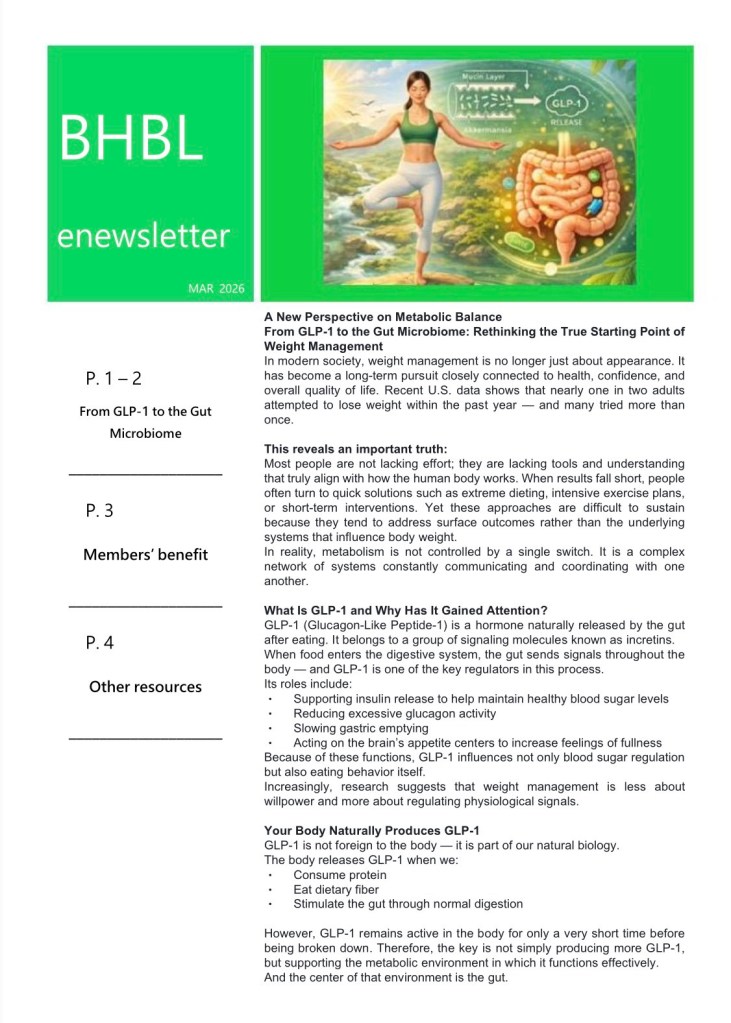
Akkermansia is a deeply researched gut bacterium known for supporting the structure and thickness of the mucin layer that lines the gut wall.
This mucus layer functions as a protective barrier that:
• Protects intestinal cells
• Maintains gut barrier integrity
• Supports microbial balance
• Helps metabolic signals transmit effectively
By helping maintain this structure, Akkermansia contributes to a healthier gut ecosystem and a more stable internal environment.
________________________________________
The Connection Between Akkermansia and GLP-1
Research suggests that a healthy gut structure is closely linked to the natural release of GLP-1.
When the mucin layer is strong and microbial balance is maintained:
• Gut cells receive nutrient signals more efficiently
• Microbial metabolites remain stable
• Hormonal signaling pathways function more smoothly
These natural signaling processes help promote GLP-1 release.
In this way, the gut environment can be viewed as the foundation that supports GLP-1 activity.
Once released, GLP-1 helps:
• Support healthy blood sugar regulation
• Coordinate post-meal metabolic responses
• Guide efficient energy utilization
Scientific focus is therefore shifting — from suppressing appetite to supporting the biological signals that regulate it.
________________________________________
Why Is GLP-1 Closely Linked to Weight Management?
GLP-1 influences three major mechanisms:
- Appetite Regulation
Signals the brain’s satiety center, naturally reducing food intake.
- Prolonged Fullness
Slows gastric emptying, allowing satisfaction to last longer.
- Blood Sugar Stability
Helps reduce sudden hunger driven by blood sugar fluctuations.
As a result, weight management is evolving from calorie restriction toward optimizing metabolic signaling.
________________________________________
Metabolism: A Collaboration of Three Systems
Metabolic health depends on multiple pathways working together:
- Gut Microbiome System
Initiates signaling processes, including natural GLP-1 release.
- Fat Energy Management System
Fat cells act as energy storage, releasing fatty acids that mitochondria convert into usable energy.
- Glucose Metabolism System
Helps glucose efficiently enter cells to provide stable energy supply.
When these systems function in coordination, the body is better able to maintain healthy body composition and energy balance.
________________________________________
Why Single Approaches Often Fail
Many weight management strategies focus on only one aspect — diet or exercise alone. Yet the body naturally seeks balance, and when other systems are unsupported, results are difficult to maintain.
This explains why many people repeatedly restart their efforts.
A more sustainable approach is to support the overall metabolic environment rather than forcing isolated changes. Health is often not about doing more — but about creating better balance.

 Better Health Better Life